


LYRICS MUSIC VIDEOS
Discover the Reason Behind the Lyrics
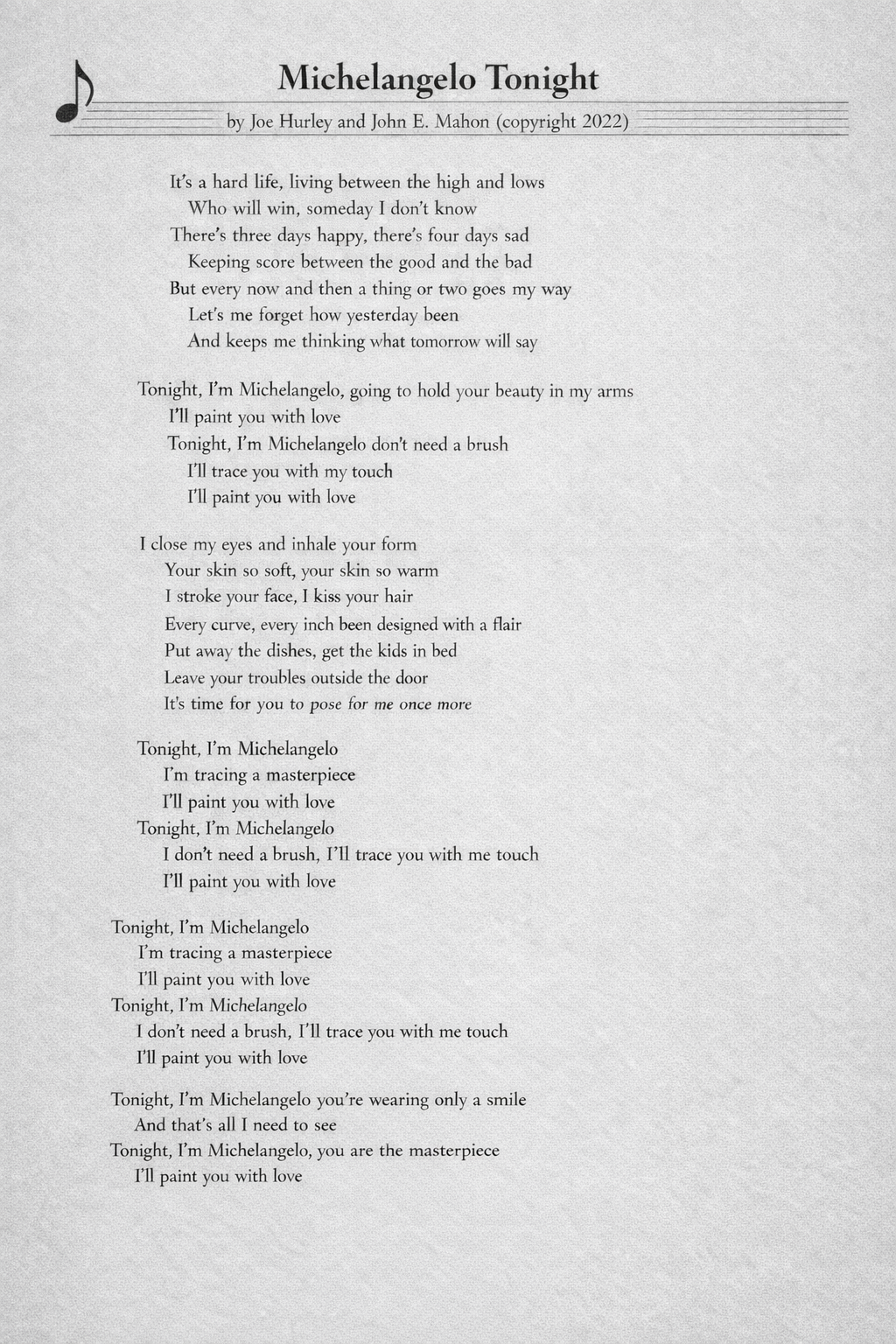
Michaelangelo
Music has always been the thread that stitched together the chapters of my life. More than fifty years ago, on a small Kentucky farm, I would sit on the front porch under a wide night sky with my German Shepherd, Sarge, listening to Elton John on a transistor radio pulling in WLS from Chicago. Those quiet nights — just me, my dog, and the stars overhead — sparked something deep in me. It wasn’t just the melodies that stayed with me, but the stories within the songs. They opened my imagination and made me realize I wasn’t just a farm boy — I was someone searching for meaning, beauty, and connection in the world around me.
I never thought of myself as the musical one. I was always drawn more to the words — the storytelling side of a song — and I often felt closer in spirit to Bernie Taupin than to Elton, not because I could ever compare, but because I understood that quiet pull toward lyrics and the way they can paint pictures in people’s hearts. Years later, when I began collaborating with John Mahon, it felt like something had finally come full circle. John brought the musical voice I never claimed to have, and in the most natural way, he became my Elton — not in stature, but in partnership — helping turn simple words into living songs.
That journey led us back to words I had first written in Columbus, Ohio, in 2005, during a season of life that felt both uncertain and hopeful. I spent many evenings at a small coffee house near my work, filling notebooks with fragments of thoughts I sensed might someday become songs. With John’s gift for melody and emotional clarity, those early writings were revisited and reshaped, and Michelangelo Tonight began to take form as a true collaboration built on trust and shared vision.
The spark for the song’s imagery came one evening when I passed a large mural of Van Gogh’s Starry Night, which led me to explore iconic works of art and ultimately to Michelangelo and his breathtaking Statue of David. Studying its details — the strength, the vulnerability, the sense of life within the stone — made me think about love in the same way: how it shapes us, reveals us, and turns ordinary moments into something timeless.
From that inspiration came the heart of Michelangelo Tonight — a celebration of love as a work of art in progress, born during a time when I was rebuilding my life and balancing days of hope with days of uncertainty — what I often called “three days happy and four days sad.” Through it all, the song became a reminder that even in life’s unfinished moments, there is still beauty being carved.
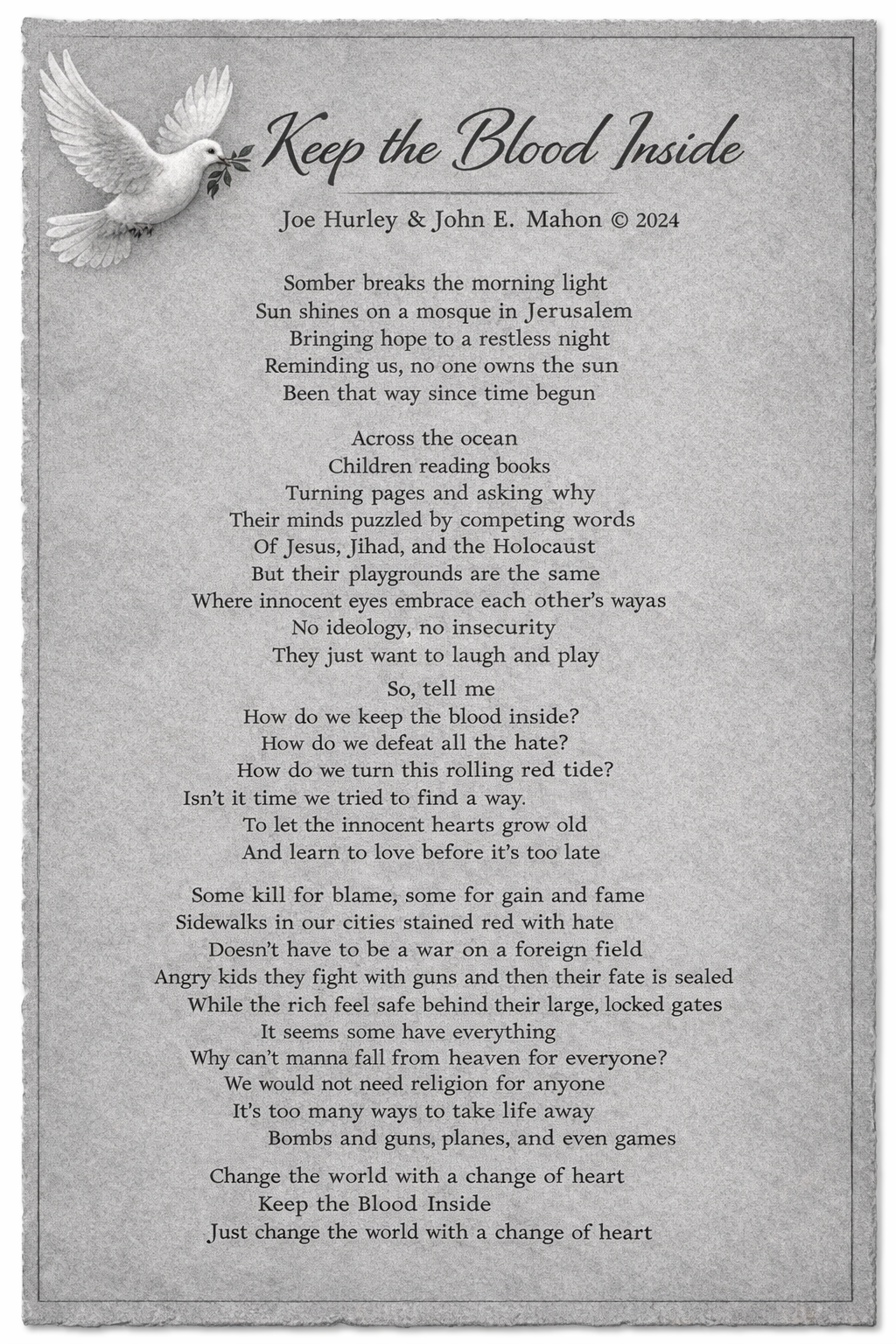
Keep The Blood Inside
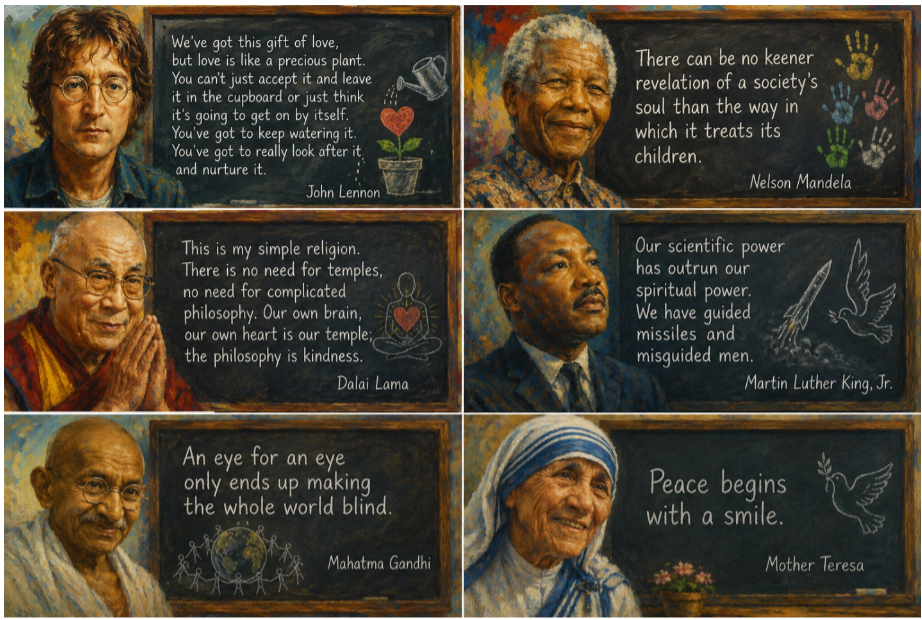
I first wrote Keep the Blood Inside in 2003, inspired by a special edition of Time Magazine filled with photographs of people whose lives had been shattered by terrorism, war, and violence. Certain images haunted me. One showed journalist Daniel Pearl with a gun to his head. Another showed his wife, Mariane, holding their son Adam. Daniel was murdered before his son was born. A second photograph showed a young boy eating a sandwich on the same concrete steps where members of his family had been killed. Blood still stained the concrete.
Looking at those images, a simple question entered my mind: How do we keep the blood inside? That question became the title and foundation of the song.
As the years passed, the world continued to change, yet in many ways it remained the same. From the tragedy of September 11, 2001, to the attacks of October 7, 2023, and the ongoing conflicts in Gaza, Ukraine, and elsewhere, innocent people continue to suffer the consequences of hatred and violence. The faces change, the locations change, and the flags change, but the tears remain the same. For many years the lyric sat unfinished while I continued pursuing a lifelong dream of songwriting. Then, through an unexpected connection, I began collaborating with John Mahon. Together we shaped the song into what it was always meant to become.
During that process, I realized the song needed more than a question—it needed an invitation. That invitation is found in the lines, “Before it is too late” and “Teach your children well.” The song does not pretend it can change all of humanity. Instead, it offers a simple belief: the world changes when hearts change. If hatred can be taught, then compassion can be taught as well. As Ralph Waldo Emerson suggested, if you make a difference in even one life, you have succeeded. If this song encourages even one person to choose compassion over hatred, then John and I will have accomplished exactly what we hoped. Perhaps that is how the world changes after all—one heart at a time.